
On May 28, 2025, a routine long-haul journey turned into a textbook case of aviation decision-making under pressure. Delta Air Lines Flight DL275, an Airbus A350-900 bound from Detroit Metropolitan Wayne County Airport to Tokyo Haneda, was several hours over the Pacific when the cockpit crew received an unexpected warning. Rather than continue across thousands of miles of open ocean, the pilots made the call to divert. The aircraft safely touched down at Los Angeles International Airport (LAX) with all passengers and crew unharmed. What looked like a simple mechanical alert quickly became a window into the evolving world of aviation safety technology—and the limits of even the most advanced systems in 2026.
The Unexpected Turn: What Happened Mid-Flight
The flight had departed Detroit normally, carrying hundreds of passengers on a 13-hour trek across the Pacific. At cruising altitude, the aircraft’s sophisticated monitoring systems flagged an issue with the engine anti-ice system on one of the Rolls-Royce Trent XWB engines. This critical component prevents ice from forming on engine inlets and sensors during high-altitude cold conditions—a routine hazard on polar and oceanic routes.
The warning was not an immediate catastrophe. No smoke, no vibration, no loss of thrust. Yet the crew followed protocol: treat the alert seriously. Continuing toward Tokyo risked encountering icing conditions far from any suitable diversion airport. LAX, a major Delta hub with full maintenance facilities for wide-body aircraft, offered the safest and most practical option. After a multi-hour turn back across the Pacific, the plane landed without incident. Passengers later described a calm cabin announcement and a smooth touchdown, followed by rebooking onto later flights.
This diversion cost Delta roughly $2.3 million in operational expenses, fuel, and passenger accommodations. More importantly, it triggered an internal investigation and FAA review focused not just on the hardware but on why modern safety systems still require such dramatic interventions.
Behind the Alert: How Engine Anti-Ice Technology Works—and Where It Falls Short
The engine anti-ice system on the A350 is a marvel of engineering. It uses bleed air from the engines, electric heating elements, and advanced sensors to keep critical surfaces ice-free. Real-time data feeds into the aircraft’s central maintenance computer, which cross-checks thousands of parameters every second. In theory, predictive algorithms should catch degrading performance before a warning even appears.
Yet in this case, the alert came without prior degradation signals. Industry experts point to several possible factors: sensor calibration drift, software interpretation lag, or environmental variables the system hadn’t fully modeled. Modern jets like the A350 generate terabytes of telemetry data per flight, but turning that raw information into actionable foresight remains challenging. Airlines increasingly rely on AI-driven predictive maintenance platforms that analyze historical patterns across entire fleets. These systems can forecast part failures weeks in advance—yet they are only as good as the data they receive and the models they train on.
The DL275 incident highlights a persistent gap: real-world conditions over remote oceans can still outpace even the best algorithms. Ice formation is notoriously difficult to predict because it depends on tiny atmospheric changes that satellites and onboard sensors sometimes miss.
Lessons for the Future: Advancing Aviation Safety Technology
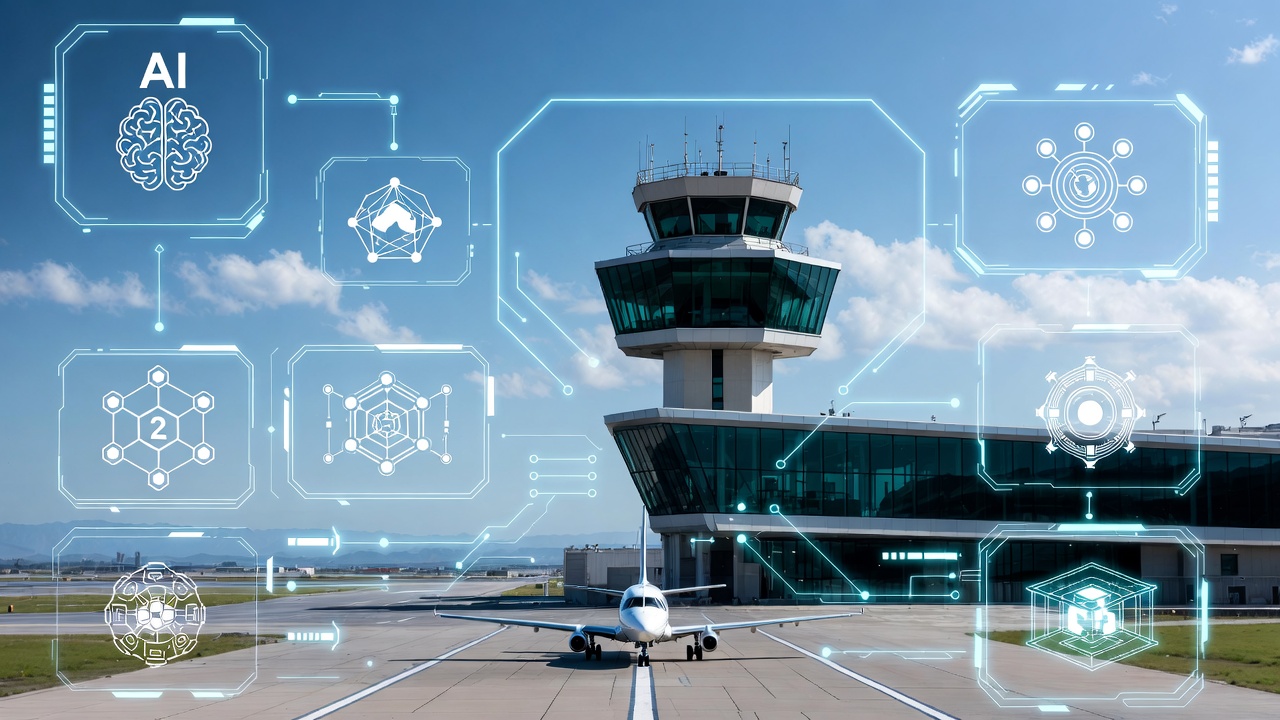
The diversion of Flight DL275 has become a case study for what aviation safety tech must improve in the coming years. Airlines and manufacturers are now accelerating adoption of next-generation tools:
- AI-Powered Predictive Analytics: Systems that process not only current flight data but also weather forecasts, historical icing events, and fleet-wide trends in real time. Some platforms already achieve 85–90% accuracy in predicting component issues before warnings trigger.
- Enhanced Sensor Networks: Newer aircraft are being retrofitted with distributed fiber-optic sensors and edge-computing units that detect microscopic ice buildup faster than traditional methods.
- Digital Twin Simulations: Virtual replicas of entire aircraft allow engineers to test “what-if” scenarios instantly, reducing the need for actual diversions during investigations.
- Satellite and Ground Integration: 5G and low-Earth-orbit satellite networks now enable continuous data streaming even over the Pacific, giving ground teams visibility long before a pilot has to decide.
The FAA and EASA have already begun reviewing certification standards for anti-ice systems in light of this and similar events. Delta has confirmed it is cooperating fully, with the aircraft undergoing detailed inspection and software updates.
Ultimately, the safe outcome of DL275 proves that current safety layers—human judgment plus technology—still work. But the incident also underscores that “good enough” is no longer sufficient in 2026. Passengers expect zero surprises. Manufacturers and airlines are racing to deliver exactly that: systems so intelligent they prevent alerts rather than merely respond to them.
As investigations continue, one thing is clear—the next generation of aviation safety tech will be defined not by how well it handles problems in the air, but by how effectively it stops those problems from arising in the first place.