
When BackToFrontShow Pricing Actually Works: A Smart Revenue Strategy
BackToFrontShow’s pricing strategy seems backwards at first glance, but savvy event organisers and venue managers know this reverse pricing model can boost profits in surprising ways. This pricing approach flips traditional ticket sales on its head, starting high and adjusting based on demand patterns.
Who This Guide Helps
Event planners running premium experiences, venue operators managing seasonal bookings, and marketing teams looking to maximise last-minute ticket sales will find these strategies most valuable.
What You’ll Learn
We’ll explore how premium event pricing creates exclusivity that drives early sales, why seasonal demand pricing works better than fixed rates, and how corporate group booking discounts can fill seats while maintaining profit margins. You’ll also discover practical ways to implement tiered pricing structure changes without confusing your audience.
The key is understanding when this dynamic pricing approach makes financial sense versus when traditional pricing wins.
Premium Events Deserve Premium Pricing Strategies
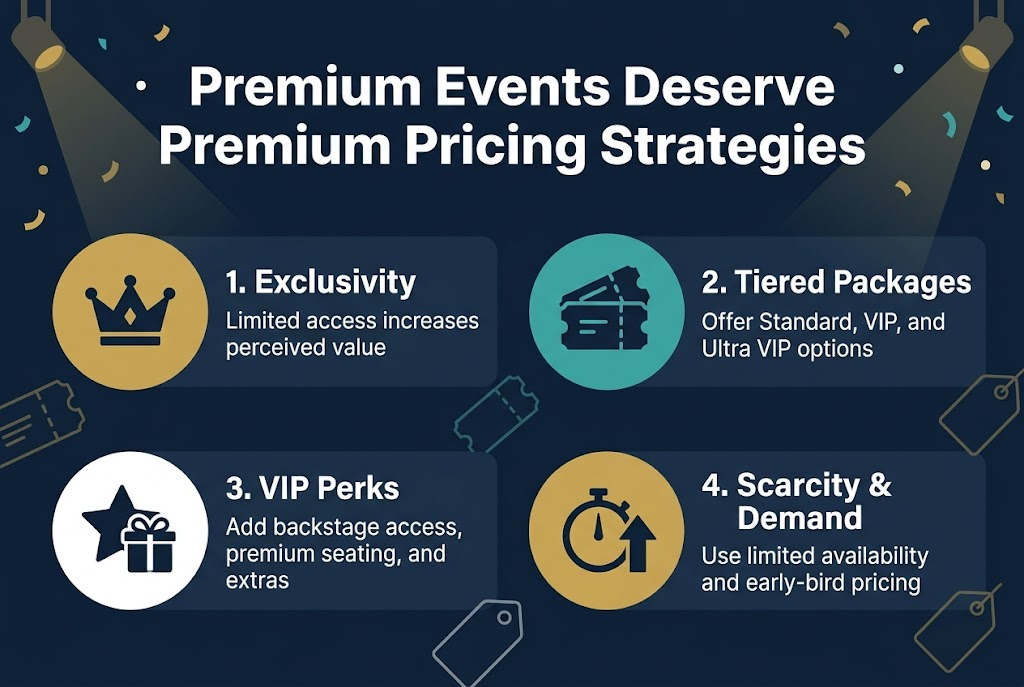
Exclusive Artist Lineups Justify Higher Ticket Costs
When BackToFrontShow secures A-list performers or rare collaborations, premium event pricing becomes completely logical. Attendees willingly pay more for once-in-a-lifetime performances that can’t be experienced elsewhere. This reverse pricing model works because the artist’s exclusivity creates genuine value that justifies the investment.
Limited Capacity Creates Scarcity and Increased Value
Venue restrictions naturally drive up demand, making strategic price differentiation essential for revenue optimisation. Smart event organisers leverage capacity constraints to implement tiered pricing structures that reward early commitment while maximising last-minute ticket sales. The scarcity factor transforms standard events into must-attend experiences.
Enhanced Production Quality Warrants Premium Pricing
High-end sound systems, elaborate staging, and immersive lighting designs require substantial investment that premium event pricing must cover. When production values exceed industry standards, attendees recognise the enhanced experience justifies higher costs. Quality becomes the differentiator that supports elevated pricing strategies.
VIP Experiences Command Top-Tier Pricing Structures
Exclusive backstage access, premium seating, and personalised service create distinct value propositions that corporate group booking discounts can’t replicate. These curated experiences appeal to customers seeking more than standard admission, making dynamic pricing strategies incredibly effective for maximising revenue per attendee.
Last-Minute Sales Generate Maximum Revenue Impact
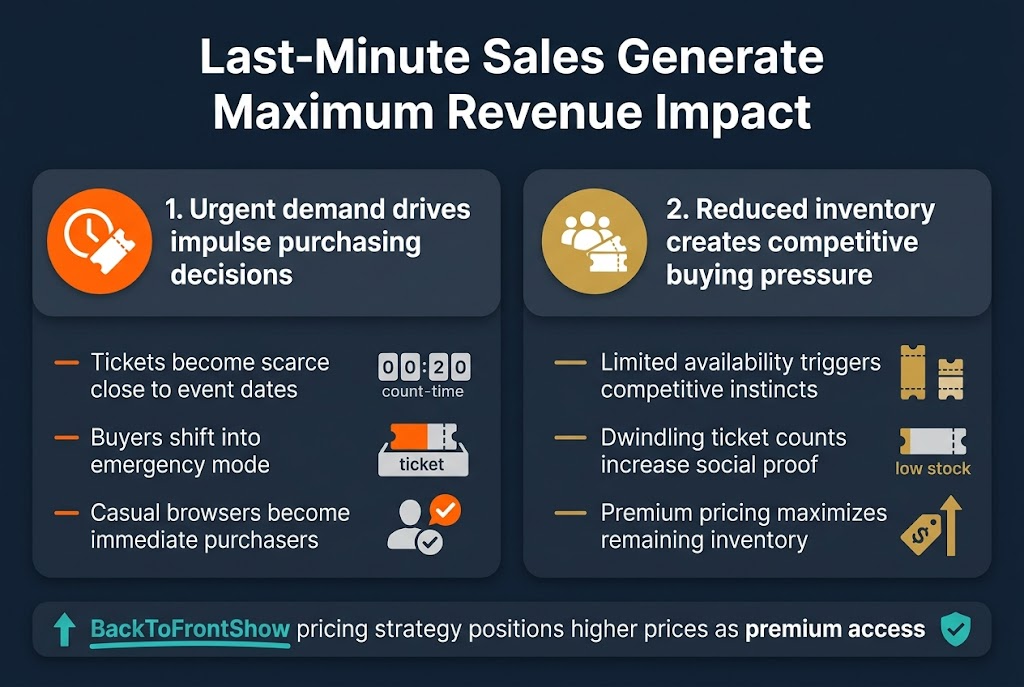
Urgent demand drives impulse purchasing decisions
When tickets become scarce close to event dates, buyers shift into emergency mode. This psychological pressure transforms casual browsers into immediate purchasers who skip the usual comparison shopping process. BackToFrontShow’s pricing strategy capitalises on this urgency by positioning higher prices as premium access rather than gouging.
Reduced inventory creates competitive buying pressure
Limited availability triggers competitive instincts among potential attendees. Social proof kicks in when buyers see dwindling ticket counts, making them prioritise securing their spot over finding the best deal. This scarcity-driven demand validates premium pricing while maximising revenue from remaining inventory through strategic price differentiation.
Seasonal Demand Cycles Support Strategic Price Increases
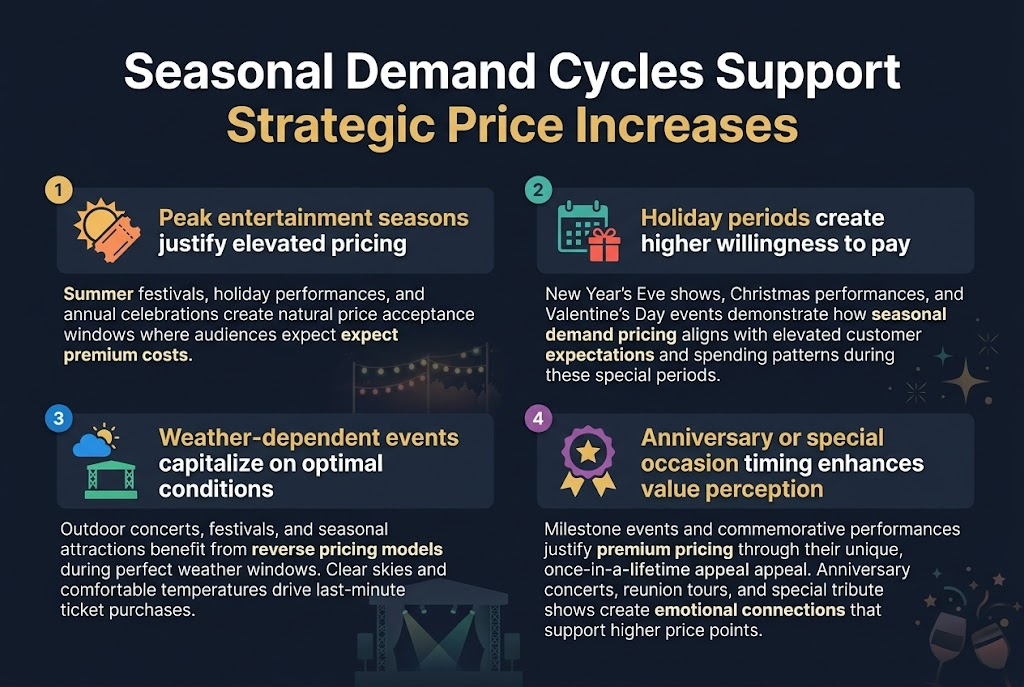
Peak entertainment seasons justify elevated pricing
Entertainment demand peaks during specific seasons, making the BackToFrontShow pricing strategy particularly effective. Summer festivals, holiday performances, and annual celebrations create natural price acceptance windows where audiences expect premium costs.
Holiday periods create higher willingness to pay
Holiday seasons transform consumer spending psychology, with families and individuals allocating larger budgets for entertainment experiences. New Year’s Eve shows, Christmas performances, and Valentine’s Day events demonstrate how seasonal demand pricing aligns with elevated customer expectations and spending patterns during these special periods.
Weather-dependent events capitalize on optimal conditions
Outdoor concerts, festivals, and seasonal attractions benefit from reverse pricing models during perfect weather windows. Clear skies and comfortable temperatures drive last-minute ticket purchases, allowing organisers to implement strategic price increases when conditions guarantee sellout crowds.
Anniversary or special occasion timing enhances value perception
Milestone events and commemorative performances justify premium pricing through their unique, once-in-a-lifetime appeal. Anniversary concerts, reunion tours, and special tribute shows create emotional connections that support higher price points, making BackToFrontShow pricing an ideal revenue optimisation tool for these exclusive occasions.
Corporate and Group Bookings Benefit From Reverse Pricing
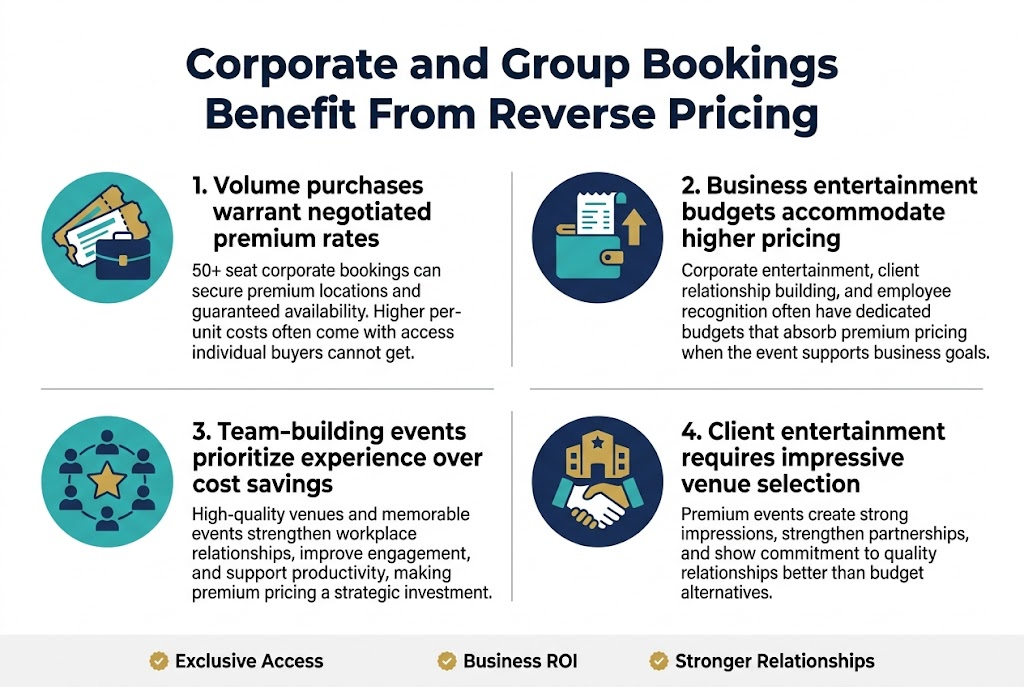
Volume purchases warrant negotiated premium rates
Corporate clients purchasing multiple tickets often face higher per-unit costs through the BackToFrontShow pricing strategy, but this actually creates value through exclusivity and guaranteed availability. Companies booking 50+ seats for annual conferences or client events can secure premium locations that individual buyers struggle to access, making the increased investment worthwhile for business-critical gatherings.
Business entertainment budgets accommodate higher pricing
Most established businesses allocate substantial budgets for corporate entertainment, client relationship building, and employee recognition events. These predetermined expense categories allow companies to absorb premium pricing without significant budget strain, especially when the event directly supports revenue generation, team morale, or client retention objectives that far exceed the ticket costs.
Team-building events prioritize experience over cost savings
Corporate team-building initiatives focus on creating memorable experiences that strengthen workplace relationships and boost productivity. Companies recognise that investing in high-quality venues and events generates measurable returns through improved employee engagement, reduced turnover, and enhanced collaboration, making premium pricing a strategic investment rather than an unnecessary expense.
Client entertainment requires impressive venue selection
Business development and client entertainment demand venues that reflect company values and demonstrate commitment to quality relationships. Corporate executives understand that hosting clients at premium events creates lasting impressions, strengthens partnerships, and differentiates their company from competitors using budget-conscious alternatives that may appear less professional or committed to excellence.
Market Positioning Through Strategic Price Differentiation
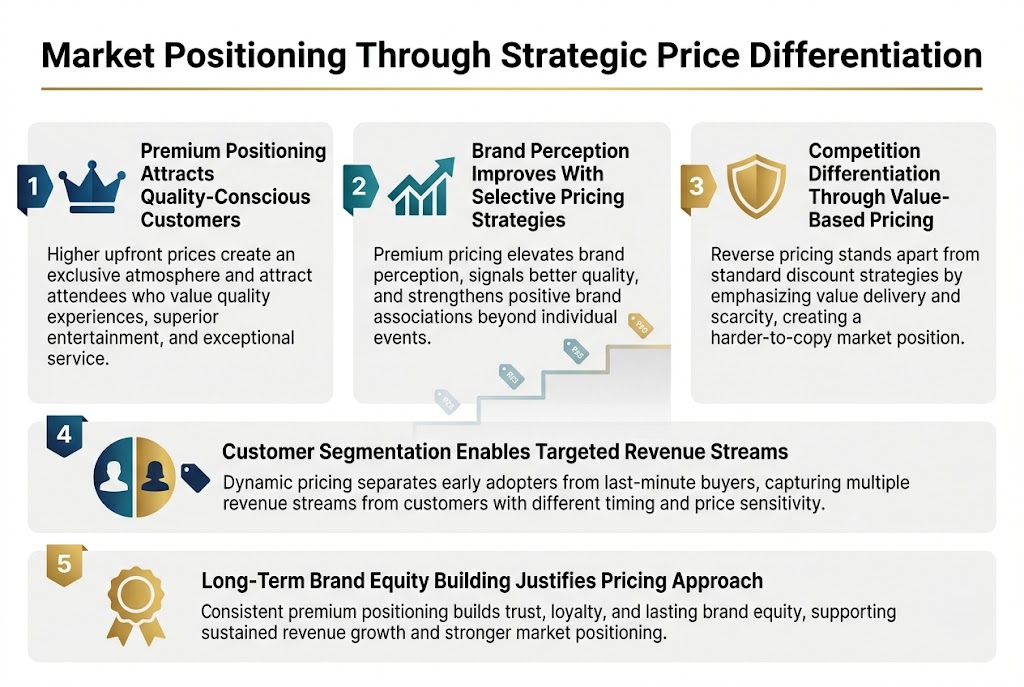
Premium Positioning Attracts Quality-Conscious Customers
BackToFrontShow’s pricing strategy creates an exclusive atmosphere that naturally draws customers who value quality experiences over bargain hunting. When events command higher prices upfront, they signal premium value and attract attendees willing to invest in superior entertainment. This selective approach builds a customer base that appreciates exceptional service and production quality.
Brand Perception Improves With Selective Pricing Strategies
Strategic price differentiation elevates brand perception by positioning events as premium experiences rather than commodity entertainment. Customers associate higher prices with better quality, creating positive brand associations that extend beyond individual events. This pricing psychology reinforces the brand’s commitment to excellence and justifies premium positioning in competitive markets.
Competition Differentiation Through Value-Based Pricing
The reverse pricing model sets events apart from competitors using standard early-bird discount structures. While others compete on price reductions, BackToFrontShow’s pricing emphasises value delivery and scarcity. This approach creates unique market positioning that competitors struggle to replicate without fundamentally changing their business models.
Customer Segmentation Enables Targeted Revenue Streams
Dynamic pricing strategies allow precise customer segmentation based on purchase timing and price sensitivity. Early adopters demonstrate strong commitment and willingness to pay premium rates, while last-minute buyers respond to different motivational triggers. This segmentation creates multiple revenue streams from diverse customer groups with varying value perceptions.
Long-Term Brand Equity Building Justifies Pricing Approach
Consistent premium positioning through strategic price differentiation builds lasting brand equity that transcends individual events. Customers develop trust in the brand’s ability to deliver exceptional experiences, creating loyalty that supports sustained revenue growth. This long-term perspective justifies short-term revenue trade-offs for stronger market positioning.
Conclusion
BackToFrontShow pricing isn’t just some wild business experiment – it’s a smart strategy that works when you know how to use it. Premium events can command higher prices because people expect quality and exclusivity. Last-minute buyers often have more urgency and disposable income, making them perfect candidates for higher rates. Plus, when demand naturally peaks during certain seasons, reverse pricing helps you capture that extra value instead of leaving money on the table.
The real magic happens when you think about your different customer types. Corporate clients and large groups operate on completely different budgets and decision-making timelines than individual buyers. They’re often willing to pay more for guaranteed availability and premium service. When you position your pricing strategy correctly, you’re not just making more money – you’re actually giving each customer segment exactly what they value most. The key is knowing when to flip the script and charge more for what others might discount.