
Your AirTag tracks your valuables everywhere, but water damage can turn this handy device into expensive junk. This guide is for AirTag owners who want to keep their trackers working through rain, spills, pool trips, and everyday moisture exposure.
AirTags have some built-in water resistance, but they’re not bulletproof against serious water damage. We’ll show you how to protect your AirTag from water damage using simple waterproof cases, smart attachment methods, and quick response tricks when accidents happen. You’ll also learn maintenance tips that keep your tracker safe for years to come.
Understanding AirTag Water Resistance Limitations
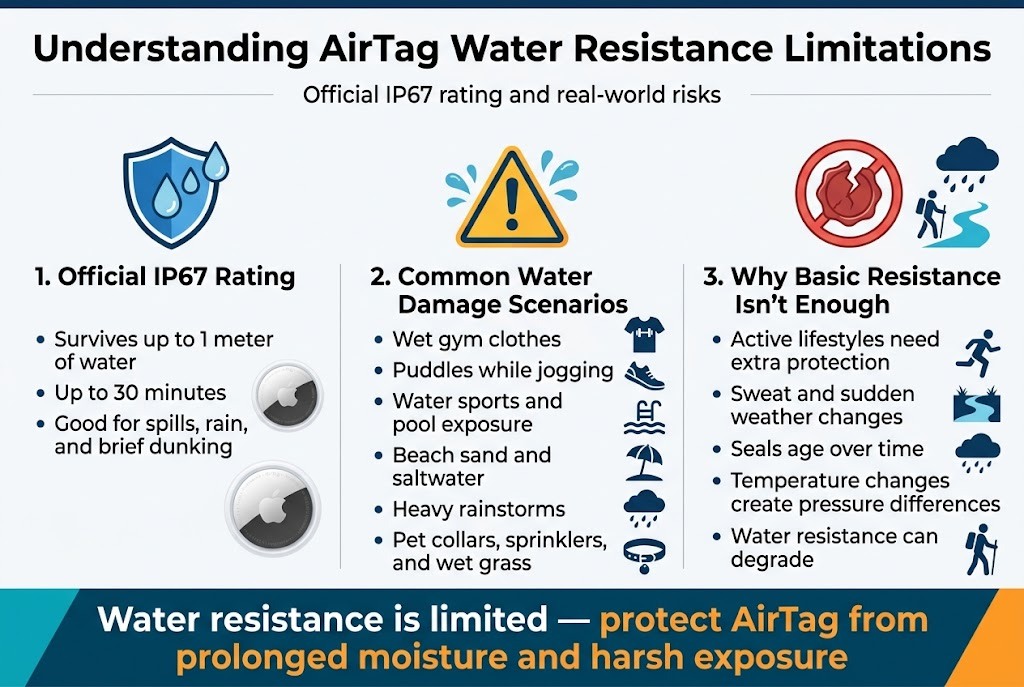
Official IP67 rating and what it actually means
Apple’s AirTag carries an IP67 rating, which means it can survive submersion in up to 1 metre of water for 30 minutes. This protection works great against accidental spills, rain, or brief dunking. However, the rating doesn’t account for water pressure from activities like swimming, high-pressure washing, or saltwater exposure, which can compromise the device’s internal components over time.
Common scenarios where water damage occurs
Most AirTag water damage happens during unexpected situations. Leaving your tagged keys in wet gym clothes, dropping them in puddles while jogging, or forgetting about them during water sports creates problems. Swimming pools, beaches, and even heavy rainstorms during outdoor activities push the device beyond its basic protection limits. Pet collars with AirTags face constant moisture from drinking, playing in sprinklers, or walking through wet grass.
Why basic water resistance isn’t enough for active lifestyles
Active users need more protection than IP67 provides. Runners encounter sweat and sudden weather changes, while hikers face stream crossings and unpredictable downpours. The factory water resistance degrades as seals age and temperature changes create pressure differences. Your lifestyle demands extra protection to keep your AirTag functioning reliably when you need it most.
Use waterproof cases and protective covers.
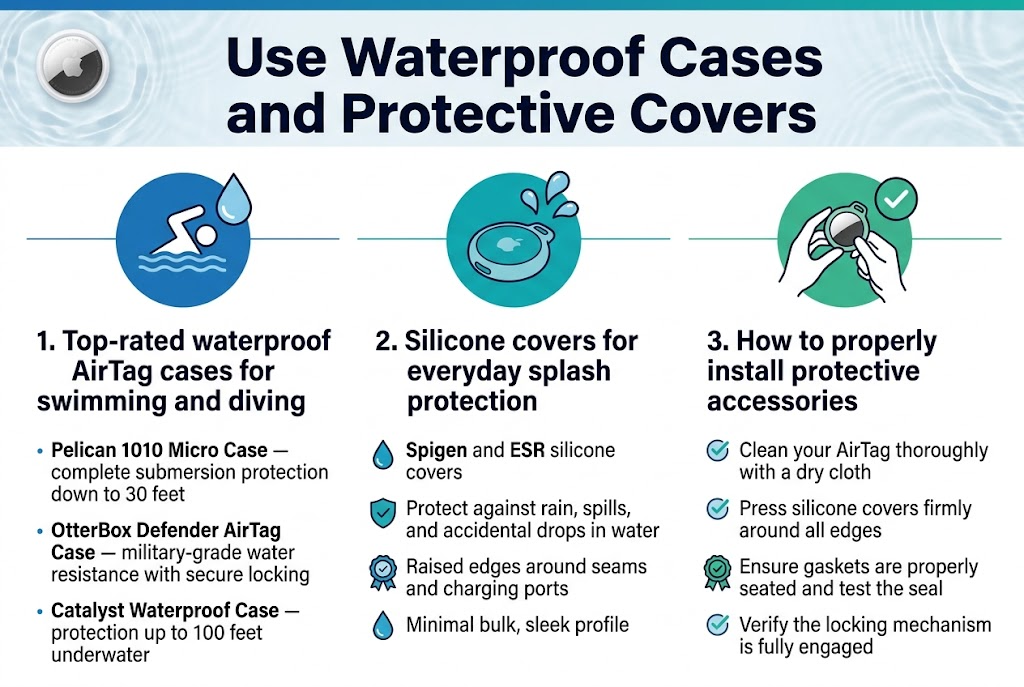
Top-rated waterproof AirTag cases for swimming and diving
Professional divers and swimmers rely on cases like the Pelican 1010 Micro Case, which provides complete submersion protection down to 30 feet. The OtterBox Defender AirTag Case offers military-grade water resistance with a secure locking mechanism. For deep-water activities, the Catalyst Waterproof Case guarantees protection up to 100 feet underwater while maintaining full AirTag functionality.
Silicone covers for everyday splash protection
Everyday silicone covers from brands like Spigen and ESR provide excellent protection against rain, spills, and accidental drops in water. These flexible covers feature raised edges around seams and charging ports, creating effective barriers against moisture infiltration. Most silicone options maintain the AirTag’s sleek profile while adding minimal bulk to your device.
How to properly install protective accessories
Clean your AirTag thoroughly with a dry cloth before installation to prevent trapped moisture or debris. Press silicone covers firmly around all edges, checking for gaps that could allow water entry. For waterproof cases, ensure gaskets are properly seated and test the seal by submerging the empty case first. Always verify the locking mechanism is fully engaged before exposing your protected AirTag to water.
Apply Waterproof Coatings and Sealants
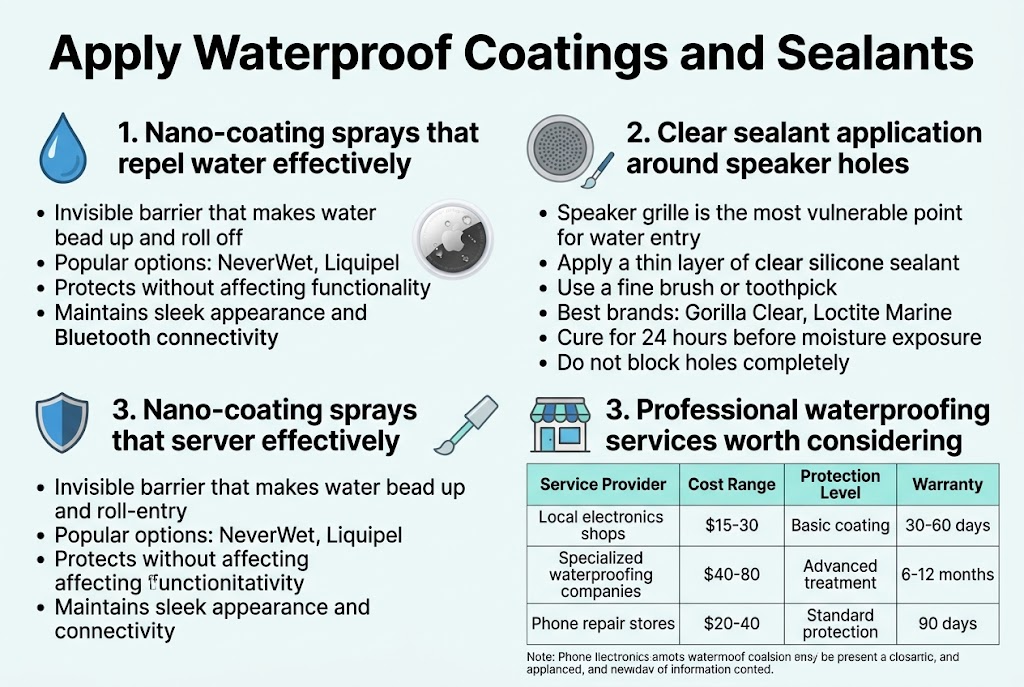
Nano-coating sprays that repel water effectively
Nano-coating sprays create an invisible barrier that makes water bead up and roll off your AirTag’s surface. Popular options like NeverWet and Liquipel offer excellent protection without affecting the device’s functionality. These coatings work by creating microscopic structures that repel moisture while maintaining the AirTag’s sleek appearance and ensuring Bluetooth connectivity remains uncompromised.
Clear sealant application around speaker holes
The speaker grille represents your AirTag’s most vulnerable point for water entry. Apply a thin layer of clear silicone sealant around the speaker holes using a fine brush or toothpick. Brands like Gorilla Clear or Loctite Marine work best for electronics. Allow 24 hours of curing time before exposing the device to moisture, and avoid blocking the holes completely to preserve sound quality.
Professional waterproofing services worth considering
| Service Provider | Cost Range | Protection Level | Warranty |
|---|---|---|---|
| Local electronics shops | $15-30 | Basic coating | 30-60 days |
| Specialized waterproofing companies | $40-80 | Advanced treatment | 6-12 months |
| Phone repair stores | $20-40 | Standard protection | 90 days |
Professional services often use industrial-grade coatings and equipment that provide superior protection compared to DIY methods. Many shops offer warranties and can handle multiple devices simultaneously.
Maintenance tips for long-lasting protection
Inspect your waterproofing every three months for wear signs like peeling or discolouration. Reapply nano-coatings after heavy water exposure or rough handling. Clean the AirTag gently with a damp cloth rather than submerging it, and store it in dry conditions when not in use. Keep spare protective materials on hand for quick touch-ups when needed.
Smart Placement and Attachment Strategies
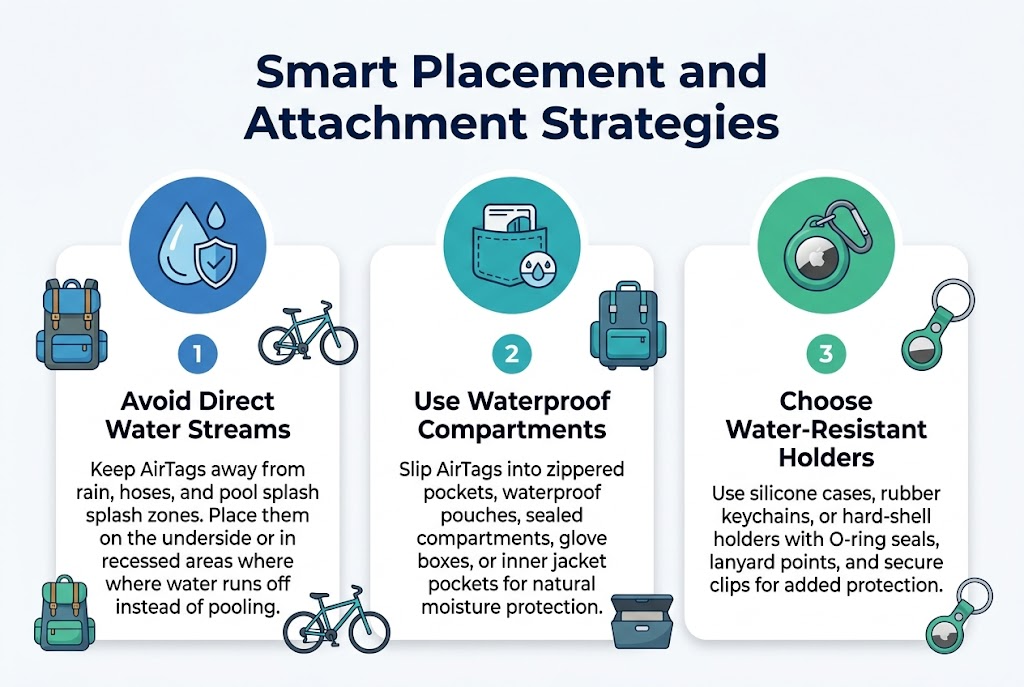
Avoid exposing AirTags to direct water streams
Keep your AirTag away from direct water contact whenever possible. Rain showers, garden hoses, and swimming pool splash zones can overwhelm the device’s basic water resistance. When attaching an AirTag to outdoor gear like backpacks or bicycles, position it on the underside or in recessed areas where water naturally runs off rather than pooling around the tracker.
Position tags inside waterproof compartments
Smart placement means thinking about natural protection zones. Slip your AirTag into zippered pockets, waterproof phone pouches, or sealed compartments within bags and cases. Car glove boxes, sealed storage containers, and inner jacket pockets offer excellent barriers against moisture. This approach works especially well for luggage tracking, where the AirTag stays protected while still providing location accuracy through multiple layers of materials.
Use water-resistant keychains and holders
Invest in quality water-resistant accessories designed specifically for AirTags. Silicone cases with tight-fitting seals, rubber keychains with gasket protection, and hard-shell holders with O-ring seals provide extra defence layers. These accessories often feature lanyard attachment points and carabiner clips, making secure placement easier while maintaining water protection during outdoor activities and daily use.
Emergency Response When Water Exposure Happens
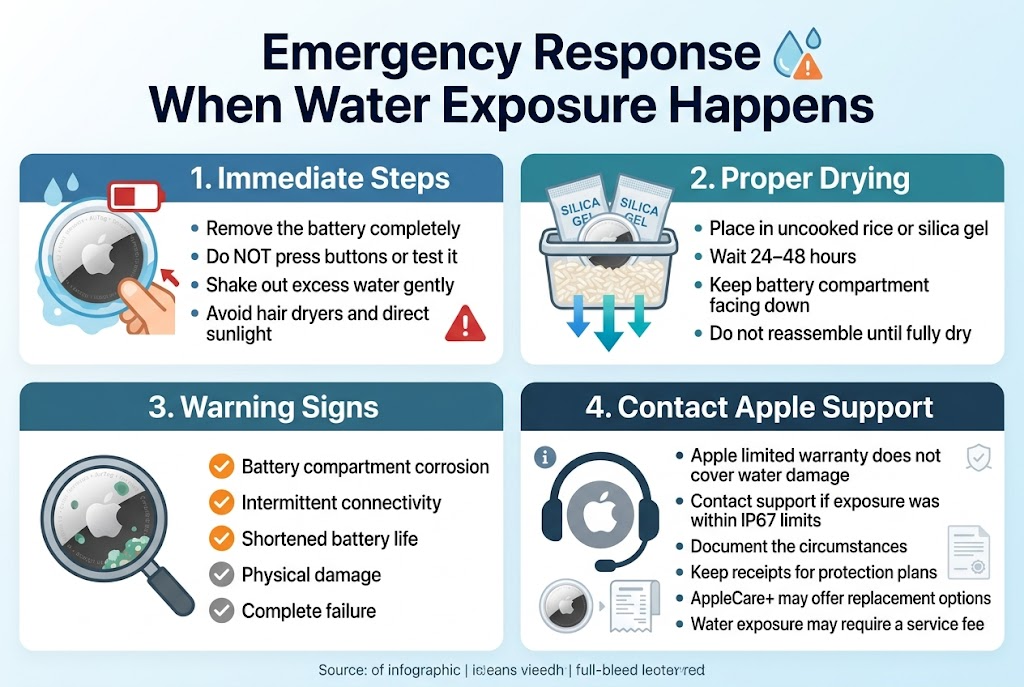
Immediate steps to take if your AirTag gets soaked
The moment water hits your AirTag, power it off by removing the battery completely. Don’t press any buttons or try to test if it’s working—this could cause internal short circuits. Shake out excess water gently and avoid using heat sources like hair dryers or placing it in direct sunlight, as rapid temperature changes can damage the internal components.
Proper drying techniques that prevent corrosion
Place your AirTag in a container filled with uncooked rice or silica gel packets for 24-48 hours. These materials absorb moisture more effectively than air drying alone. Position the device with the battery compartment facing down to allow gravity to help drain any trapped water. Avoid reassembling until you’re completely certain all moisture has been eliminated.
Signs your AirTag needs professional repair or replacement
Watch for these warning signs after water exposure:
- Battery compartment corrosion: White or green buildup around battery contacts
- Intermittent connectivity: Frequent disconnections from your iPhone
- Shortened battery life: Battery draining faster than normal
- Physical damage: Cracks in the casing or speaker mesh
- Complete failure: Device won’t power on after proper drying
When to contact Apple Support for warranty claims
Apple’s limited warranty doesn’t cover water damage, but you should still contact support if your AirTag was exposed to water within normal IP67 limits (1 metre for 30 minutes). Document the circumstances and keep receipts if you purchased additional protection plans. AppleCare+ may provide replacement options for accidental damage, though water exposure typically requires a service fee.
Long-Term Maintenance for Water Protection
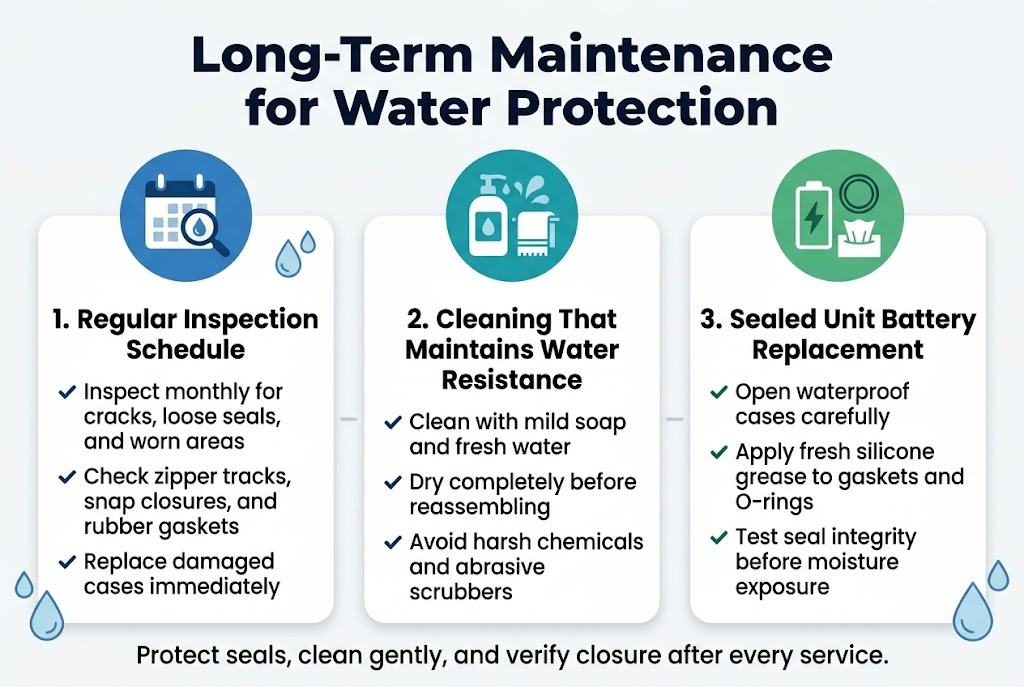
Regular Inspection Schedule for Wear and Damage
Check your AirTag protective gear monthly for cracks, loose seals, or worn areas that could let water seep through. Look closely at zipper tracks, snap closures, and rubber gaskets since these spots fail first. Replace any damaged cases immediately rather than waiting for complete failure.
Cleaning Methods That Maintain Water Resistance
Clean protective cases with mild soap and fresh water, avoiding harsh chemicals that break down waterproof materials. Dry everything completely before reassembling, paying special attention to sealing surfaces. Never use abrasive cleaners or scrubbers that could scratch protective coatings.
Battery Replacement Considerations for Sealed Units
Opening waterproof cases for battery changes requires careful resealing to maintain protection. Apply fresh silicone grease to gaskets and O-rings during reassembly, checking that all sealing surfaces align properly. Test the seal integrity with a tissue paper method before exposing your AirTag to moisture again.
Conclusion
Your AirTag might seem tough, but water can still cause serious damage if you’re not careful. The good news is that protecting it doesn’t have to be complicated or expensive. Simple steps like using a waterproof case, applying protective coatings, and being smart about where you attach your AirTag can save you from costly replacements down the road.
Don’t wait until your AirTag takes an unexpected swim to think about protection. Start with the basics – grab a decent waterproof case and keep your device away from high-risk water zones. If something does go wrong, act fast to dry it out completely. Your wallet will thank you later, and you’ll never have to worry about losing track of your belongings because of a little water.