
The TikTok Logo has become one of the most recognizable symbols in modern digital culture. It represents creativity, short-form video entertainment, and the explosive rise of social media storytelling. Behind this simple yet powerful icon lies a deep branding strategy that helped shape global engagement on platforms like TikTok.
In today’s competitive digital world, logos are not just visuals—they are identity systems. The TikTok logo stands out because it blends music-inspired motion with neon-style aesthetics, creating instant recognition across the USA and global markets. Its bold design connects emotionally with users, especially Gen Z and Millennials.
This article explores the full journey of the TikTok Logo, including its history, design meaning, colour psychology, branding power, controversies, and future evolution. If you want to understand why this logo dominates social media branding, this deep guide will give you every insight in a clear and practical way.
History of TikTok Logo and Its Origins
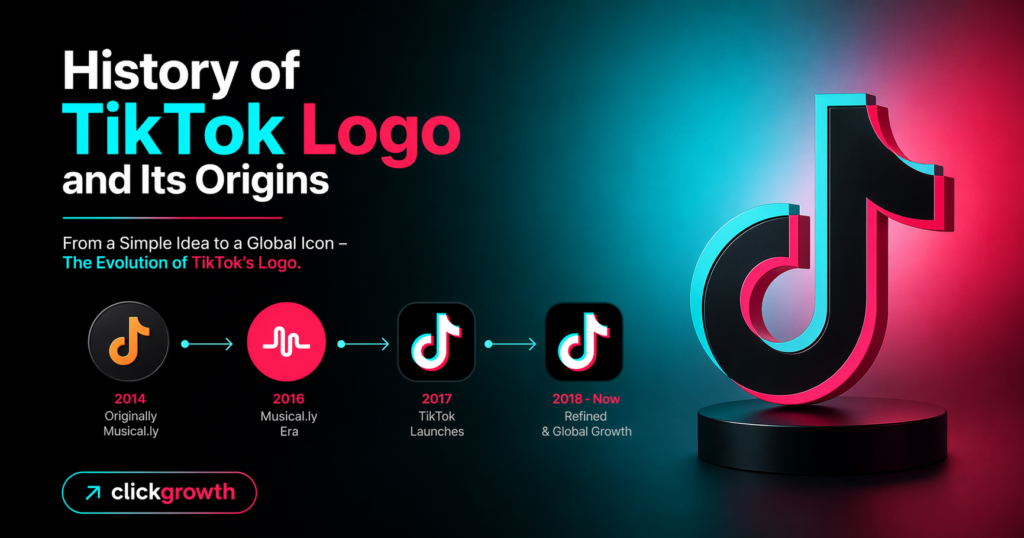
The TikTok Logo was introduced when the platform launched internationally under the name TikTok after merging with Musical. ly. The branding needed to reflect music, creativity, and fast-paced video sharing. That’s why designers created a music-note-inspired symbol that feels dynamic and modern.
The platform TikTok focused on simplicity and emotional appeal. The logo quickly became a cultural identity marker, especially among younger audiences in the USA.
Key points behind its origin:
- Inspired by music notes and digital rhythm
- Designed for mobile-first recognition
- Created for global youth appeal
- Built to represent short-form video culture
The TikTok Logo was not just designed—it was strategically engineered for viral branding success.
Evolution and Design Changes of TikTok Logo
The TikTok Logo has undergone subtle refinements rather than drastic redesigns. This consistency helps maintain strong brand recognition across all platforms and devices.
Logo evolution overview:
| Year | Change Type | Description |
|---|---|---|
| 2016 | Initial concept | Musical.ly influence visible |
| 2018 | Rebranding | TikTok identity introduced |
| 2020 | Refinement | Cleaner edges, stronger contrast |
| 2023–2026 | Optimization | Better digital scaling |
The key idea behind the TikTok Logo evolution is stability. Instead of changing frequently like other apps, TikTok focused on strengthening recognition.
Why the design stayed consistent:
- Strong brand memory retention
- High digital adaptability
- Consistent user trust building
- Global visual identity control
The TikTok Logo proves that evolution does not always require redesign—it requires refinement.
Meaning Behind TikTok Logo Colors and Symbol
The TikTok Logo uses a striking combination of neon cyan, pink, and black. These colors are not random—they represent motion, creativity, and digital energy.
Color psychology breakdown:
| Color | Meaning | Emotional Impact |
|---|---|---|
| Cyan | Innovation | Fresh, digital energy |
| Pink | Creativity | Youthful, playful vibe |
| Black | Depth | Strong contrast and clarity |
The overlapping effect in the TikTok Logo creates a 3D vibration illusion, symbolizing music movement and video rhythm.
Symbol meaning:
- Music note = sound-driven creativity
- Motion effect = viral content flow
- Neon glow = digital-age identity
The platform TikTok uses this design to instantly connect emotion with visual branding.
Branding Strategy Behind TikTok Logo
The TikTok Logo is not just design—it is a global marketing strategy. It was built to dominate attention in a crowded social media space.
Core branding strategies:
- Minimalism for recognition
- High contrast for visibility
- Emotion-driven design
- Youth-focused identity
Strategic impact:
- Increased app downloads in USA
- Strong influencer adoption
- High engagement retention
- Viral brand recall
The TikTok Logo acts as a visual shortcut for entertainment. When users see it, they instantly associate it with creativity and fast content consumption.
Psychological Impact of TikTok Logo on Users
The TikTok Logo plays a powerful role in user psychology. It triggers curiosity, excitement, and engagement even before the app opens.
Psychological triggers:
- Dopamine association with short videos
- Bright colors increase attention span
- Motion illusion creates excitement
- Repetition builds brand memory
The platform TikTok leverages these psychological signals to keep users engaged longer.
Why it works:
- Simple design reduces cognitive load
- Neon colors activate visual interest
- Music symbol connects emotionally
- Familiarity increases trust
The TikTok Logo is engineered to influence user behavior subconsciously.
TikTok Logo Usage Guidelines and Branding Rules
Companies and creators must follow strict rules when using the TikTok Logo. It is protected intellectual property, and misuse can lead to legal issues.
Official usage rules:
| Rule | Description |
|---|---|
| No distortion | Keep proportions intact |
| No color change | Maintain original palette |
| No cropping | Always show full logo |
| No animation edits | Use official motion only |
Proper usage includes:
- Marketing materials
- App promotion
- Educational content
- Press releases
The TikTok Logo must always represent TikTok accurately to maintain brand integrity.
Controversies and Public Discussions Around TikTok Logo
Like many global brands, the TikTok Logo has faced discussions related to cultural influence, digital addiction, and branding dominance.
Key concerns:
- Overexposure in youth culture
- Platform addiction debates
- Data privacy discussions
- Branding dominance in USA market
Despite criticism, the TikTok Logo remains highly influential and recognizable worldwide.
Its strength lies in simplicity and emotional branding, which keeps users engaged across all demographics.
Future of TikTok Logo and Branding Direction
The TikTok Logo is expected to remain consistent, with only minor refinements in the future. The focus will likely stay on digital optimization rather than redesign.
Future predictions:
- More adaptive UI integration
- Enhanced AR/VR branding usage
- Improved accessibility design
- Stronger global consistency
The platform TikTok will continue expanding its identity while preserving the iconic TikTok Logo structure.
Conclusion
The TikTok Logo is more than just a visual symbol—it is a powerful branding engine that shaped modern social media culture. From its music-inspired origin to its neon glow design, it represents creativity, speed, and digital storytelling at its core.
Throughout this guide, we explored how the TikTok Logo evolved, what its colors mean, how it influences psychology, and why it dominates branding strategies in the USA and global markets. The success of TikTok shows how strong visual identity can build massive cultural impact.
In a world full of competing apps, the TikTok Logo stands as a perfect example of how simplicity and emotional design create long-term recognition. Its future will likely stay consistent, proving that great branding does not always need change—just refinement and strategic growth.
If you understand the story behind this logo, you also understand the power of modern digital branding.
FAQs About TikTok Logo
1. What does the TikTok Logo represent?
The TikTok Logo represents music, creativity, and short-form video entertainment with a modern digital identity.
2. Why is the TikTok Logo black, pink, and cyan?
These colors symbolize energy, creativity, and digital motion, making the logo more eye-catching and memorable.
3. Has the TikTok Logo changed over time?
Yes, but only slightly. The design has been refined for clarity while keeping its original identity consistent.
4. Who designed the TikTok Logo?
It was created by ByteDance’s internal branding team to reflect music-driven social media culture.
5. Why is the TikTok Logo so popular?
Because it is simple, visually striking, and strongly connected to viral short-video culture worldwide.